Developing Digital Skills

Image

To equip learners to use abundant content we need to help them to develop their own range of information literacy and digital scholarship skills. More than developing critical analysis skills (although this is the first step) learners need to find ways of creating their own libraries of easily accessible content. Much like an OER repository, they need to learn how to create a social bookmarking library in a tool such as Diigo or Zotero so that it is easy to return to the content they have harvested. Personally, my Diigo account is my most used web tool during study, I store readings here, highlight text, share with my colleagues, engage in some discussions around certain papers and finally, I can always go back to documents and articles I stored years ago. I also use Feedly as an RSS aggregator to bring together my favourite feeds from the internet in one place so that I can filter the information I want to look at rather than starting with a fresh search each time.

In order to support students in developing these skills we were asked to create a short course to help students studying at level 6 (final year undergraduate) attain some of the digital literacy skills required to meet the Open University Information Literacy Agenda. We were asked to create a course that uses only OER’s available through the internet as the main resource. Secondly we were asked to apply the principles from  Siemens (2005), Connectivism: a learning theory for the digital age These include

Learning and knowledge rests in diversity of opinion

Learning is a process of connecting specialised nodes or information sources

Learning may reside in non-human appliance

Capacity to know more is more critical than what is currently known

Nurturing and maintaining connections is needed to facilitate continual learning

Ability to see connections between fields, ideas and concepts is a core skill

Currency (accurate, up-to-date knowledge) is the intent of all connectivist learning activities

Decision making is itself a learning process. Choosing what to learn and the meaning of incoming information is seen through the lens of a shifting reality. While there is a right answer now, it may be wrong tomorrow due to alterations in the information climate affecting the decision. 

Here is the course outline.

Image

Image

Image

MY PLN

MY PLN

A few years ago I was asked to create an image to represent my Personal Learning Network, now repeating the task 2 years later not much has changed in relation to Web 2.0 but APPS are the big difference!

An investigation of cMOOCs and xMOOCs

Over the past few days I have been taking a look at the MOOC DS106  So what is DS106? Well, it is a set of tutorials with assignments to help people create digital stories. This is a topic that interests me as I think it is a great way to introduce innovative assessment and althoughImage I have collected together some resources in the past about Digital Storytelling, I hadn’t come across this before. My first question is therefore, if it is a MOOC how many people have engaged with it, or more to the point, why hadn’t I heard about it before? If it isn’t ‘massive’ then is it just a collection of web-based self-study resources?

Well, I don’t know how many people have used it, so let’s assume it is a MOOC – what subdivision is it? This is a cMOOC; as I described in my previous post –  this is defined as a collaborative learning environment focused around a specific topic, often created by maverick academics. The learning space is put together using standard Web 2.0 tools such as personal blogs, with embedded videos and hyperlinks and social spaces where individuals can talk about the topics presented. The pedagogy is certainly social constructivist as ‘learners’ are encouraged to discuss and share their creations via the website; linking to their own blog posts. We can’t therefore just call it ‘just a collection of web-based self-study resources’ as the communication that surrounds the resources mean that the experience certainly isn’t a lonely one. In general, when first entering the site it seems a bit chaotic –  no start and end date, no strict navigable structure, no discernable tutor – although that becomes clearer later.  That said, it appears to be quite an active site where people have happily shared their creations, and although badges have been mentioned, these don’t seem to influence the impetus for engaging with the site. 

Next stop, how does DS106 compare to an xMOOC? I compared it with a course from FutureLearn

‘Fairness and nature: when worlds collide’. First of all, this course is held in the Futurelearn repository, making it easy to find. Secondly, this course has a clear start and end date.Image

The course itself is produced by the University of Leeds, a corporate production with a corporate feel. Before entering the course there is an introduction and video, clearly informing the audience of how the course is underpinned by the academic’s research in the subject.

On entering the course there is a guidance page with a link to a guidance video and explanation of what course materials and activities are available and how to engage with the course, as well as a FAQ page.

The units themselves have a simple activity design structure, heavily video orientated, minimal text, interspersed with activities – quizzes, peer assignments, reflection etc. This structure is clearly one of xMOOC -aligned to traditional education with content, discussions and forms of assessment. Interestingly at the end of the course it asks questions about how the author could make improvements. Although this is useful for the MOOC, it could be argued that it is more beneficial for the main pay-for course, as the author has had the opportunity to  ‘prototype’ some content and receive feedback which could enhance the programme.

Science Wonder Stories   cc licensed ( BY NC SD ) flickr photo shared by giulia.forsythe

Sci-Fi. MOOCs. Visual Artifact. Done with homework.

Based on the following images:

Science Wonder stories cover

downloaded from x-ray delta one on Flickr

http://www.flickr.com/photos/x-ray_delta_one/4395950294/

A Mirror for Observers, (Nov 1958, Edgar Pangborn) Cover art by Richard Powers

CC: Attribution – Noncommercial – Share alike

Reflections on MOOCs

MOOCs are innovative trends that impact both the educational and business environments. However, MOOCs are not new and they are composed of multiple smaller scale innovations that contribute to the whole – – See Big and Little OERs. Over the past 2 years  2 main types of MOOCs have emerged cMOOC – collaborative learning environments focused around specific topics and groups, often created by maverick academics. xMOOCs are more aligned to traditional education with content, discussions and forms of assessment, but on a more scalabe model. These are the MOOCs that institutions are most interested in and they see a possible marketing opportunity.

 Image

xMOOC creation is available now from Blackboard in the form of ‘Course Sites’; Blackboard allows customers to develop 5 MOOCs as part of their contract and as a Blackboard customer this is therefore the most cost effective solution for developing our first MOOCs. Course sites contain all the features, learning analytics and communication tools of the closed VLE, including mobile and live classroom. Course Sites also provide a range of templates and is working with the Mozilla Open Badge framework to provide capabilities for badge provision and storage.

These courses would act as ‘shop windows’ for the quality of our online university courses and provide opportunities for partner engagement.

However, with limited spaces available, usage should not be at the discretion of individual academics as this risks poor research and learning design and ultimately poor implementation and dissemination of results. Instead it is recommended that an institutional project team is initiated to monitor MOOC development, composed of executive decision makes, IT implementation managers, learning designers, researchers, subject specialists and potential learners.

Big and Little OERs

Although I have known about OERs for some years, I have only recently encountered the term ‘Big OER’ and ‘Little OER’ the terms sounded intriguing, what could they mean? and When does a little OER become a big one?

A good starting point is to listen to the audio slidecast by Martin Weller (2011). In it he focuses mainly on little OERs; items such as PowerPoints, podcasts, mini videos that we have all produced at some point for our student audiences and then stuck back in the drawer (usually on a memory stick or lost on the desktop graveyard) never to be seen again. Image: What can we do that we didn't do before?


Martin’s message is to liberate your old content and share it to one of the many digital sharing sites available today. The digital benefits could be:


Digital outputs


There are drawbacks however, sometime the sharing sites disappear or become ‘pay to view’ and much of the content becomes outdated and it is of variable quality.

You also need to check with your organisation what you are able to share, often the IP of content created for work purposes is that of the organisation, but if you decide to share things under your own name you will probably need to include a disclaimer – something like this:

Please note that this is the personal space of XXX and only contains my personal views, thoughts and opinions. It is not endorsed by XXX nor does it constitute any official communication of XXX


As for Big OERs, they look more like media productions and need some form of financial backing. Although they may use small quantities of little OERs on the periphery of the learning, the main form of delivery is slick multimedia. Who benefits is yet unclear, as I have previously posted the main audiences seem to be those of the US and UK and the learners tend to be highly educated autonomous leaners who want to learn something for ‘fun’. The content is not easy to repurpose, although you will probably be able to make use of the peripheral little OERs and open access readings.

Weller (2011), Academic output as collateral damage (slidecast).


How good are OERs and can they save you time?

We were recently asked to take a look at the use of OERs as part of a course design and see whether the use of OER caused me to change what I wanted to teach, and what time saving (if any) would be gained; here is what happened.

First of all I scoped out a short 5 week scheme of work to deliver a range of information literacy skills that would be suitable for an undergraduate class (level 6). I used the Open University’s Information Literacy framework to determine what needed to be delivered, I thought this would give the scheme of work a clear focus and perhaps improve my chances of finding suitable learning materials. After reading about the purpose of OERs (or Learning Objects as they were first defined) I came to understand that according to Downes’s paper Learning Objects: Resources for distance education worldwide (2001)  the ideology was to reduce educators lesson planning time and the multiple creation of key undisputed facts. The story goes like this:

the world does not need thousands of similar descriptions   of sine wave functions available online. Rather, what the world needs is one,   or maybe a dozen at most, descriptions of sine wave functions available online…Even if only one such piece of educational content were created, it could be accessed by each of the thousands of educational institutions teaching the same material.

Downes (2001)

Heartened by the thought that this ideology has been circulated for the past 13 years and that a number of repositories exist to house such Learning Objects, combined with the fact that I had used a well-publicised Information Literacy framework I felt sure to find a range of OERs to cover the key undisputed facts.

 Next, we were asked to use a range of repositories to search for suitable OERs and rate what we discovered there; these were:

I wanted to ensure that if there were suitable resource, I would use the best one; so I searched for OERs for EACH lesson in ALL the repositories.

Here are some of the general observations I noted:

  • Often locked down or leads to a pay to view or register piece of content.
  • Resources that have been rated as good can still be poor quality, lacked metadata and had not been accessed for accessibility.
  • Many are old and no longer accessible (Flash player) or look dated.
  • Many belong to organisations and are only suitable for that organisation; these don’t have the opportunity to repurpose the resource.
  • Very Americanised.
  • Some broken links.
  • Advertise their own organisations and courses which isn’t very professional when you are promoting your own organisation.
  • Some free evaluation videos but then there is a cost to use them.

Despite these disappointing findings, I did manage to find some excellent resources; most notably  were:

Lesson 1: Searching Internet Resources

Ariadne/Jorum http://www.vtstutorials.ac.uk/ (excellent resource)

Lesson  2: Making use of search engines effectively

Open learn – http://www.open.edu/openlearn/body-mind/health/health-studies/finding-information-health-and-lifestyle/content-section-1.3.2 This resource has been reproduced for multiple subject areas and basically covers all the literacy skills. However, I am not sure I would use it due to the amount of advertising wrapped around it.

Lesson 3:Using Open Access Journals

Rice Connexions http://cnx.org/contents/03a430f1-0ef7-4f23-87d1-b52169a06f7b@4 Heavy textual but relevant resource, it could be reused and reduced if necessary.

Lesson 4: Social Bookmarking and Referencing tools

Ariadne – http://www.oercommons.org/courses/social-bookmarking-in-plain-english/view Great Common Craft videos but for ‘Evaluation use only’.

Lesson 5: Using RSS feeds effectively – Keeping up to date

Rice Connexions  http://cnx.org/contents/efc03c7a-0b8a-4021-b307-b82968b86806@1    Netvibes introduction – could be useful but would need to be heavily edited and feels like a sales pitch, the materials seem to come from the website but don’t seem to carry any referencing, so there would be a concern about copyright.

In comparison I did a quick Google search and YouTube search and found all  these resources on the first page of search results and a lot more!

In conclusion, did the OERs cause me to change what I wanted to teach? No, I managed to find something for each lesson. However, there was more choice using a basic Google and Youtube than the repositories. The repositories limited the choice – which would be fine if I could guarantee that the content stored there was good quality, easily searchable (metadata), accessible (HTML5 not Flash) and current; but it wasn’t. I found that I had to apply the same level of analysis (appropriateness, validity, accessibility, quality look and feel) to items in the repositories as I did in the open searches.

What time saving (if any) did I gain? In comparison to creating all the resources from scratch, I could say that searching for Learning Objects takes a lot less time, additionally,  I don’t have all the skills and resources at hand to create such a variety of Learning Objects, that would require range of media creation teams; with time and cost implications. However, if I had used a Google and YouTube search in the first place, I would have saved even more time and had more choice of current and accessible Learning Objects!

Three key issues about Open Educational Resources (OERs)

As the 3 year UKOER drew to a close  and the final evaluation of the HEFCE funded intervention in OER was published  (McGill et al, 2013), what lessons have been learnt and how do they compare with the current findings of the OER research Hub?

It was difficult to identify just 3 key issues with OERs as there are so many models and perspectives that the learning objects could be viewed from, with each model producing a different perspective on the overall impact of OERs; be this good or bad. However, the OER Research Hub is starting to produce more polarised reports focused around three main topics and it is these I shall concentrate on.

Image

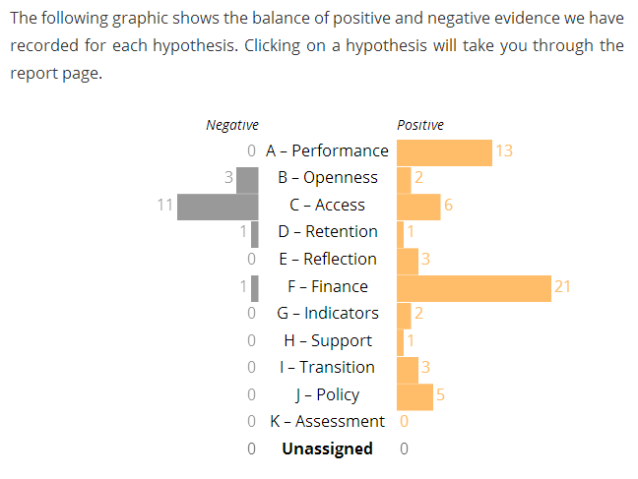
  1. Learner Performance – The OER Research Hub identifies OERs having a positive impact on learner performance and satisfaction; this being mainly composed of the views of educators and less so of their students. Whereas this does not feature within the top 3 benefits of encouraging and releasing OERs within the HEFCE review impact summary. However, there does seem to be a positive correlation between the production of OERs and  pedagogy, which in turn should favour learner performance and satisfaction.
  2. Access – Although this is a fundamental aspect of Open Educational Practice (OEP) it does not appear that OERs are having a significant impact on opening access to education for the most disadvantaged world populations.  The HEFCE review impact summary states that 55% of their respondents identified this a top benefit yet the OER Research Hub maps clearly show that most of the creation and usage activity takes place in the US and Europe, with little creation or usage taking place elsewhere.

Even with all the funding and the significant institution-wide engagement, awareness around OER and OEP outside projects is still fairly limited.

(McGill et al, 2013)

One of the hypotheses poses was – would MOOC activity be any different? So far, this doesn’t seem to be the case, the world MOOC map shows that  apart from some minor activity around China and Australia, it seems again that the predominant creators and users are the US and Europe.

ImageImage3. Finance – With the introduction of open books and open journals (Open Access) it was envisaged that institutions and students would see considerable financial savings. The HEFCE review impact summary states that 41% of their survey respondents believed that OERs would increase sharing between educators in the same discipline and the OER Research Hub reports a high number of positive reports on financial benefits. However, much of the evidence of financial savings is anecdotal. It is true to say that students have used open books and journals without detriment to their studies but institutions cannot say for certain that open access  has reduced costs.

In summary, the findings so far are disappointing, with no clear evidence (after several years of projects) of a positive impact on teaching and learning. It could be said that those stakeholders involved directly with projects have found a renewed interest in pedagogical approaches, however, the real benefits should be measured on the impact on teaching and learning.   Taking the HEFCE e-Learning Strategy document (HEFCE, 2009) indicators as benchmarks for measuring the impact of innovations on teaching and learning, it is still questionable how much of an impact OERs have had on these benchmarks:

  • INCREASING FLEXIBILITY AND ACCESS
  •  INCREASING STUDENT ENGAGEMENT
  •  IMPROVING ASSESSMENT AND FEEDBACK  DEVELOPING SKILLS
  • REINFORCEMENT OR REVISION
  • PROMOTING REFLECTION UPON LEARNING AND PERSONAL DEVELOPMENT
  • SUPPORTING INTERACTION WITH PEERS AND COLLABORATIVE WORK
  • STRENGTHENING THE LINKS BETWEEN THEORETICAL AND PRACTICAL ASPECTS
  •  PREPARING STUDENTS FOR THEIR CAREERS/PROFESSIONAL LIFE

McGill, L., Falconer, I., Dempster, J.A., Littlejohn, A. and Beetham, H. (2013) Journeys to Open Educational Practice: UKOER/SCORE Review Final Report, London, JISC. Also available online at  https://oersynth.pbworks.com/w/page/60338879/HEFCE-OER-Review-Final-Report (accessed 24 March 2014).

Do you believe in Open Education?

Since the inception of Open Educational Resources (OER) in 2001, pioneered by MIT’s OpenCourseWare and announced on the front page of the New York Times (Goldberg, 2001), there have been a plethora of new developments over the years, within the UK and Internationally. The steady increase in the quality and range of these resources has been guided by such groups as UNESCO (United Nations Educational, Scientific and Cultural Organization) who coined the phrase OER in 2002 and  SCORE (Support Centre for Open Resources in Education) an Open University and HEFCE  (Higher Education Funding Council for England) joint venture between 2009 – 2012 (SCORE, undated).

What’s my experience?

OERs

OER

Examples of research into the use of OERs were revealed at the OER13 conference I attended.

These included:

‘Qualitative methods for researching teachers’ (re)use of OER’ (Beaven, 2013)

‘Sharing with real and imagined audiences: reframing disciplinary narratives as OER’ (Hughes and McKenna, 2013)

‘Student perspectives on social learning and the use of OERs’ (McNicol, 2013)

‘The evaluation and re-use of open educational resources for language teaching: a case study’ (Pulker and Calvi, 2013)

‘The Wikipedia Education Program: open educational practice on a global scale’ (Poulter, 2013)

In the final example, ‘The Wikipedia Education Program: open educational practice on a global scale’ (Poulter, 2013), the research presents international case studies of teachers using the collaborative editing of Wikipedia pages, in the classroom, for summative assessment; these being supported with surveys involving students. This is truly an example of joint construction of knowledge, social interaction and sharing. This type of research may commence with the following types of questions: What complications are encountered in editing social wiki pages? Do students’ develop new skills during collaborative activities? And do students value social learning and social outputs?

Open Access

Open access

I have used the Directory of Open Access Journals on several occasions and I promote it where I can to students looking for an alternative to library based or restricted publications. Some people have argued that the journals are not peer reviewed and therefore carry no credence. However, I have found that the authors are often well informed researchers – where possible I take a look at their DI (Digital Identity) through LinkedIn if I want further reassurance.

Open Courses

In 2008 the first signs of something bigger began to appear, OER began to evolve, moving the debate about open content into the MOOC (Massive Open Online Content) arena (Futurelearn, undated); with the NMC Horizon Report 2013 classifying MOOCs as ‘one of the fastest uptakes ever seen in higher education’ but they warn that ‘there is a need to examine these new approaches through a critical lens to ensure that they are effective and evolve past the traditional lecture-style pedagogies’ (Johnson et al, 2013 : 4). I have engaged with just one MOOC – a Coursera and University of Edinburgh initiative: Elearning and Digital Cultures but I have looked at several from a design perspective.

Do you believe?

We therefore see three different agendas for Open Education; the small scale share, repurpose and reuse agenda within the educational community – OERs, the UNESCO social agenda for increasing access to education and research (particularly in developing countries) – Open Access and the Massive Open Online Content agenda driven by private organisations and consortiums; for which the audiences is not yet clear but it is becoming clearer as demonstrated in MITs site statistics. What is clear however is that each has a different audience, different creators of content and different ways of sharing content through a range of web-based technologies.

Open Education

Take a look at this prezi if you want to know more and have your say at the end!

http://prezi.com/xk23ebgetqgz/?utm_campaign=share&utm_medium=copy&rc=ex0share

References


Beaven, T. (2013) ‘Qualitative methods for researching teachers’, (re)use of OER. In Proceedings of OER13: Creating a Virtuous Circle. Nottingham, 26th/27th March, England.

Futurelearn (n.d.) About Us. [online] Available at: http://futurelearn.com/about  [Accessed: 26/03/2013].

Goldberg, C. (2001) ‘Auditing Classes at M.I.T., on the Web and Free’, New York Times, 4th April, p.1. [online] http://www.nytimes.com/2001/04/04/us/auditing-classes-at-mit-on-the-web-and-free.html [accessed 26/03/2013 21:53]

Hughes, J. and McKenna, C. (2013) ‘Sharing with real and imagined audiences: reframing disciplinary narratives as OER’, In Proceedings of OER13: Creating a Virtuous Circle. Nottingham, 26th/27th March, England.

Johnson, L., Adams Becker,S.,Cummins,M.,Estrada,V.,Freeman,A.,and Ludgate,H.(2013)’NMC Horizon Report: 2013 Higher Education Edition’, The New MediumConsorium p4 [online] www.educause.edu/ir/library/pdf/HR2013.pdf [accessed 26/03/2013 22:15]

McNicol, S. (2013) ‘Student perspectives on social learning and the use of OERs’, In Proceedings of OER13: Creating a Virtuous Circle. Nottingham, 26th/27th March, England.

Poulter. M. (2013) ‘The Wikipedia Education Program: open educational practice on a global scale’, In Proceedings of OER13: Creating a Virtuous Circle. Nottingham, 26th/27th March, England.

Pulker. H and Calvi. A. (2013) ‘The evaluation and re-use of open educational resources for language teaching: a case study’, In Proceedings of OER13: Creating a Virtuous Circle. Nottingham, 26th/27th March, England.

SCORE (n.d.) About SCORE. [online] http://www.open.ac.uk/score/about_SCORE [accessed: 26/032013 22:00].


Horizon Scanning

In the world of online learning the landscape is continually changing, often ideas conceived and developed for the classroom are evolved for the online environment. However, things are changing and innovations are now being designed specifically for the online environment and then adapted for the classroom, several reports enable us to investigate innovations in HE organisations and their progress towards them, here is a summary of what the reports tell us.  The NMC Horizon Report (Johnson et al, 2014) and the more UK centric NMC Technology Outlook: UK Tertiary Education 2011–2016 (Johnson and Adams, 2011) identify key trends, significant challenges and important developments in educational technology; top of the list for short term implementation are social media, blended learning and learning analytics. The Innovating pedagogies report presents ‘10 innovations that are already in currency but have not yet had a profound influence on education’. (Sharples et al, 2013:3), these include, unsurprisingly, MOOCs (Massive Open Online Content) and badges to accredit learning, learning analytics and various collaborative and social learning opportunities including gaming and maker culture.

However, elearning is also developing at a pace within business organisations, these are potential competitors to HE education, particularly when the National Scholarship Programme (NSP) ceases to fund undergraduate students from 2015, creating an open market. The New Learning Agenda:2013-14 Towards Maturity Benchmark Study (Overton and Dixon, 2013) identifies organisational interest in MOOCs and badges; this may indicate a shift in preference from formal to more informal qualification measures, particularly amongst established corporate organisations.

Let’s take a look at 2 technologies that could appear within the online environment within the next couple of years

Collective Intelligence

Although OERs have been slow to take off the idea hasn’t gone away and the MOOC movement is having a profound influence on this practice; reinforcing social constructivist pedagogy. Open Educational Ideas http://www.idea-space.eu/ is an EU Commission supported project that encourages educators to collaborate from the outset on creating OERs rather than repurposing the end result. Although there is still work to be done on creating tool sets and gaining a critical mass of interest for certain projects, the initial concept looks promising.

Relevance for teaching, learning, research or information management

  • Collective intelligence promotes peer-to-peer learning through knowledge networks
  • Knowledge networks encompass multiple points of view and allow for people to make instant updates to research and topics.
  • Implicit knowledge stores provide insight on the learning choices we make by tracking our online searches and activity, and ultimately direct us to the discovery of new information.

Some other examples:

ChemSpider, developed by the Royal Society of Chemistry, is a free database for chemical structures, gathering curated research from across the web into a single search repository:

http://www.chemspider.com.

The Khan Academy is a vast but highly curated collection of videos that supplement school curriculum: http://www.khanacademy.org/.

The Knowledge Web project is designed to explore ways to map human understanding and experience: http://www.k-web.org/.

For Further Reading

Learning Reimagined: Participatory, Peer, Global, Online

http://dmlcentral.net/blog/howard-rheingold/learning-reimagined-participatory-peer-globalonline

(Howard Rheingold, DMLCentral, 22 July 2011.) This article addresses the implications of open educational resources to influence the pedagogy behind self-organizing peer learning groups.

Mahout my Hadoop and Embrace Collective Intelligence

http://blog.readingroom.com/2011/06/30/mahout-my-hadoop-and-embrace-collectiveintelligence/

(Martin Buhr, Reading Room UK, 30 June 2011.) The author breaks down collective intelligence to four stages: recommendation, classification, prediction, and clustering.

3D Telepresence

Although 2D telepresence has been used for some time now, an example being Blackboard Collaborate, 3D telepresence is still in its infancy. However, over the past couple of years students have consistently requested more live classroom sessions with their tutors, reinforcing the notion that visual cues and synchronised engagement is increasing in popularity – at least amongst communities with good broadband services and sharing the same time zone. To make the change to 3D, improvements in broadcast software (360 Degree image capture) will be needed and improved streaming facilities, although this seems as yet a distant dream, several high-profile 3-dimensional demonstrations of the technology have taken place; for instance, CNN made extensive use of the technology six years ago during coverage of the 2008 US presidential election.

Telepresence in Practice

VisiDeck is collaborating with the University of Derby to take an architect’s two dimensional plans to create a virtual 3D world that clients can “walk” through:

http://www.derby.ac.uk/news/games-technology-virtually-advances-architecture.

Pathways to Space is an initiative at the Powerhouse Museum where secondary students are developing space robotics, and searching for life on Mars through video conferencing:

http://www.powerhousemuseum.com/pathwaystospace/.

For Further Reading

Holograms Deliver 3-D, Without the Goofy

http://www.nytimes.com/2010/12/05/business/05novel.html

(Anne Eisenberg, The New York Times, 4 December 2010.) In recent years, holograms are being actively developed at research centres within universities and private industry.

Holograms have the potential to not only provide realistic 3D imaging of complex objects, but also be a driving force in teleprescence.

Leukaemia Sufferer Stepan Supin Stays Home, Sends Robot to School

http://www.news.com.au/technology/leukaemia-sufferer-stepan-supin-stays-home-sends-robotto

school/story-e6frfro0-1225992845324

(Herald Sun, 24 January 2011.) A telepresence robot allows a student with leukaemia to participate in the classroom and interact with teachers and other students while he is at home.

Vu Introduces Telepresence System for Remote Offices, SMBs

http://www.informationweek.com/news/smb/network/227900432

(Daniel P. Dern, InformationWeek, 21 October 2010.) Vu is offering a new technology that brings down the price of videoconferencing technology in the workplace or in schools. The system brings hi-definition video and better than telephone audio quality.

References

Johnson, L. and Adams, S. (2011) Technology Outlook: UK Tertiary Education 2011–2016, NMC Horizon Report Regional Analysis [e-book] Austin: TX, The New Media Consortium; available at http://www.nmc.org/publications/technology-outlook-uk-tertiary-education [Accessed: 14 Feb 2014].

Johnson, L., Adams Becker, S., Estrada, V., Freeman, A. (2014). NMC Horizon Report: 2014 Higher Education Edition [e-book] Austin, Texas: The New Media Consortium. Available at http://www.nmc.org/publications/2014-horizon-report-higher-ed [Accessed: 14 Feb 2014].

Overton, L. and Dixon, G. (2013) New Learning Agenda:2013-14 Towards Maturity Benchmark Study. [e-book] Towards Maturity. Available through: http://www.towardsmaturity.org/article/2013/05/07/towards-maturity-2013-benchmark-study/ [Accessed: 14 Feb 2014].

Sharples, M., McAndrew, P., Weller, M., Ferguson, R., FitzGerald, E., Hirst, T., and Gaved, M. (2013).Innovating Pedagogy 2013: Open University Innovation Report 2. [e-book]Milton Keynes: The Open University.

OLnet What is it and how might you use it?

OLnet – the Open Learning network is a website dedicated to Open Educational Resources, so what can it offer educators in relation to their practice?

Firstly, this in not one tool, as the Technology Enhanced Learning Research Programme (2013) explains, TEL (Technology Enhanced Learning) is complex and is characterised as a bricolage,

a productive and creative innovation process that involves bringing together and adapting technologies and pedagogies, experimentation to generate further insights and a willingness to engage with local communities and practices.

(TECHNOLOGY ENHANCED LEARNING RESEARCH PROGRAMME, 2013, p7)

Hosted via Moodle, the website acts as a receptacle for numerous devices embedded within it, these support different aspects of practice namely:

  • Compendium and Compendium LD. These tools offer frameworks to support practitioners with the learning design element of creating OERs (Open Educational Resources).
  • Cloudworks, Evidence Hub and Cohere. These tools assist researchers in their understanding of how OERs are developing; providing examples in practice and using Scoopit, collates a worldwide map of contributors to OER projects.
  • Openlearn, Labspace and the Open learning initiative. These searchable resource intensive websites house OERs themselves and offer a wide range of open source learning content in multiple disciplines.

Returning to previous discussions of innovation, could this site be considered innovative? Using the model and criteria applied previously, yes it could be described as innovative. From the discussion above we can see that it contains devices and curricula that are up-to-date and change our perspective of education. Underpinned by study and research it provides a space where educators from different disciplines are able to work together. However, innovation is also defined by process and OLnet provides that too, an example of which is demonstrated using the Compendium tool below.

process diagram showing how OLnet works

Design a site like this with WordPress.com
Get started